
Gaston County Probate Court Role
North Carolina does not assign Gaston County estates to an independent probate court. The NC Judicial Branch estates help topic states that the elected Clerk of Superior Court in each county acts as the probate judge. In Gaston County, that means the Clerk of Superior Court and assistant clerks handle most estate hearings, qualification of personal representatives, letters, inventories, accountings, and many estate orders. The office also handles many special proceedings tied to property, incompetency, guardianship, partitions, and foreclosure-related matters.
That local structure affects how Gaston County probate records are searched. eCourts may show case information, and public self-service terminals may show civil, special proceeding, and estate case data, but the paper estate file is still tied to the county where the estate was opened. For Gaston County estates, the practical custodian is the Clerk of Superior Court at the county courthouse. If a will is challenged through a caveat, the contest does not stay as a routine clerk hearing. The research states that a Superior Court judge hears that will-validity dispute.
The NC estates resource is the statewide source for estate procedure, and it frames why Gaston County probate records are clerk records. Its estate guidance helps users tell the difference between routine administration and cases that require a judge.
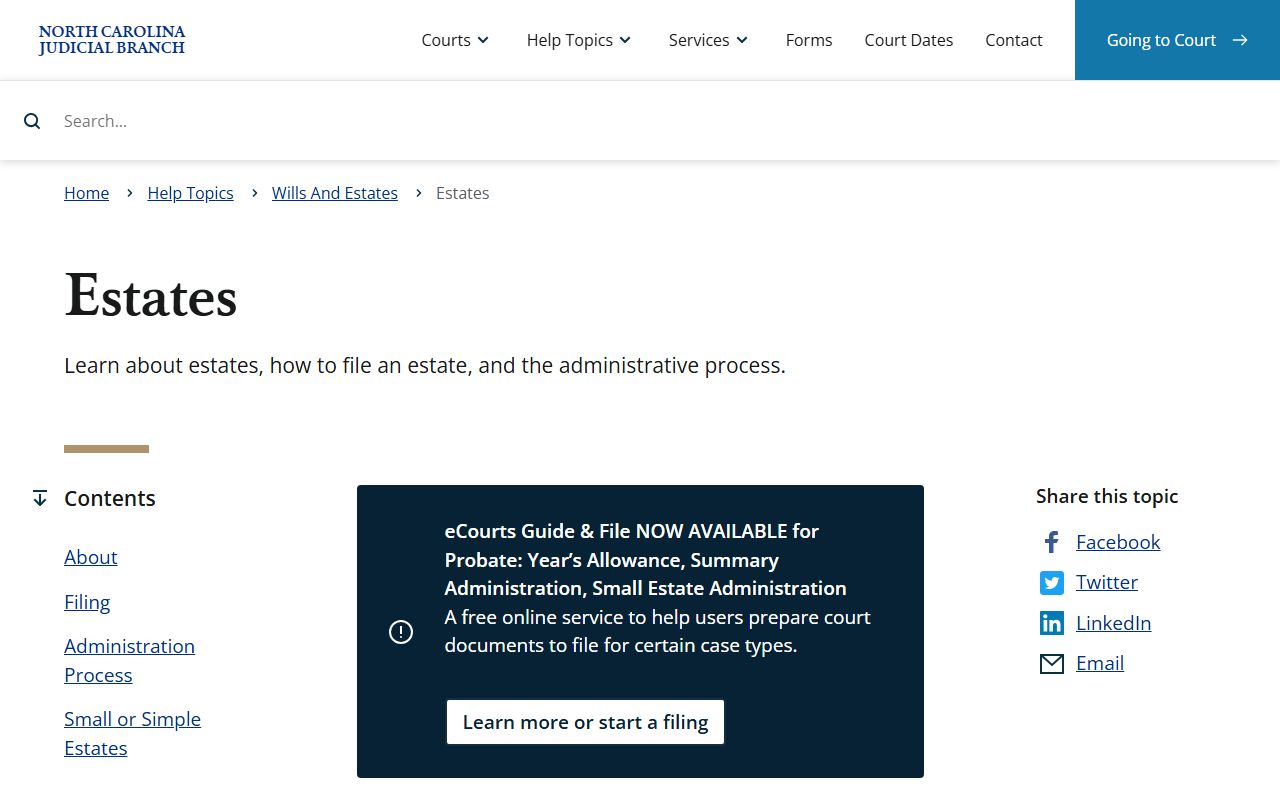
For local record access, the statewide estate overview should be paired with the Gaston County Clerk's office because copies, terminals, and paper files remain county-based.
Gaston County Probate Terms
Probate files use short legal terms that can make a case summary hard to read. In Gaston County probate records, these words usually identify the person who died, the person seeking authority, the type of authority issued by the Clerk, or the kind of proceeding being opened. A plain reading helps separate a will file from a guardianship file and an ordinary estate from a contested caveat.
- Testator
- The person who made a will before death.
- Executor
- The person named in a will to carry out estate administration after qualification by the Clerk.
- Intestate
- A death without a valid will, which can lead to letters of administration instead of letters testamentary.
- Guardianship
- A proceeding where the Clerk decides who may manage a person's care, affairs, property, or both.
- Conservatorship
- A property-management term used in some states; in North Carolina probate research, comparable local records are usually framed through guardianship of the estate or general guardianship.
The NC guardianship help topic explains how the Clerk of Superior Court acts through the court to appoint a guardian of the person, guardian of the estate, or general guardian. That matters for Gaston County probate records because guardianship files can contain orders, inventories, accountings, and bond-related filings rather than a will or estate administration alone.
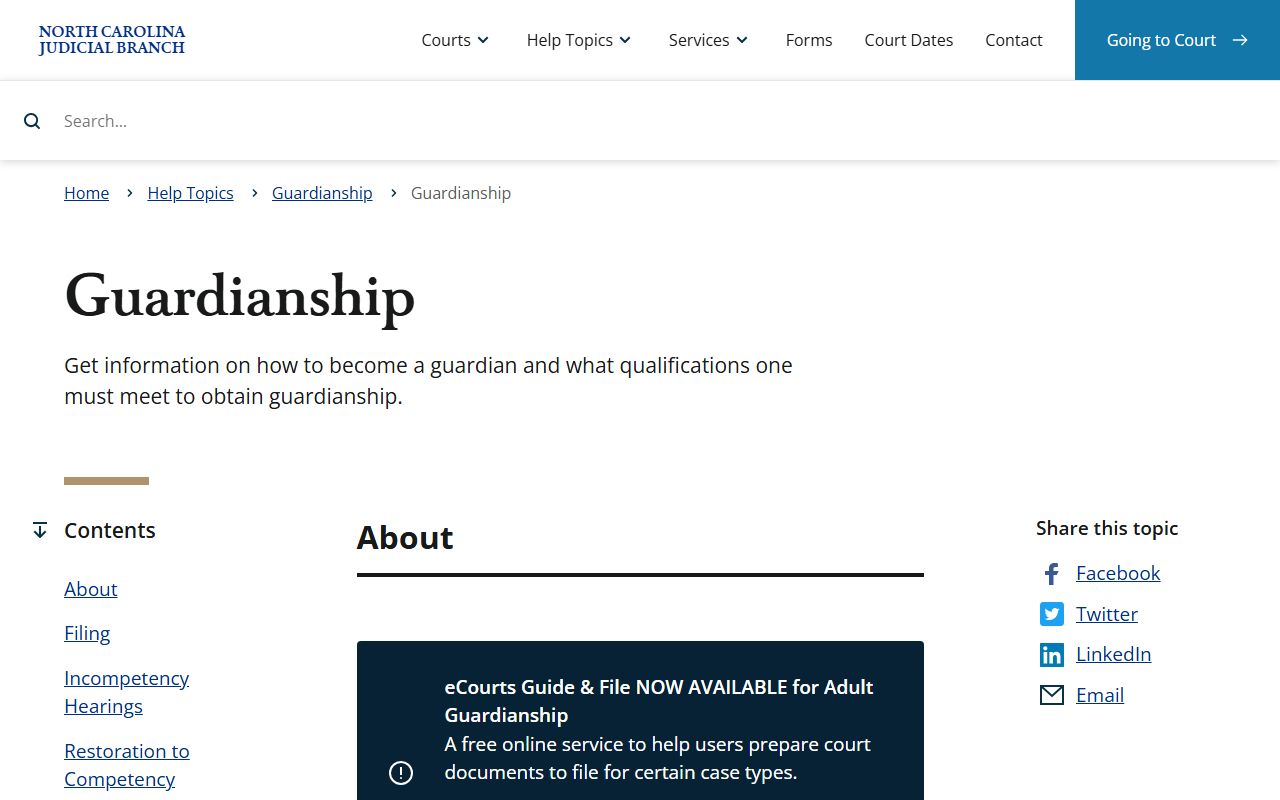
Guardianship entries should be read with more care than ordinary estate entries because incapacity, minors, and private financial details can affect public access.
Search Gaston County Probate Records
Gaston County probate records have more than one access channel. The online path starts with the statewide NC eCourts Portal, where users can search by party name or case number and filter to Gaston County. The in-person path uses public self-service terminals and the paper file at the Clerk of Superior Court. The phone and mail path starts with the Clerk's office, which can confirm whether the requested file is in Gaston County, what identifying details are needed, and what copy or certification rules apply.
- Search the eCourts Portal by estate name, party name, or case number, then use the Gaston County location filter when the search needs to stay local.
- Review the case summary for case type, status, parties, and events, but do not assume every will, inventory, order, or accounting image is available online.
- Visit the Clerk of Superior Court public terminal for civil, special proceeding, and estate case information when online results are incomplete.
- Ask the Clerk for the paper estate file in the county where the estate case is located, which is Gaston County for local estates.
- Request plain or certified copies after staff confirms the file, copy method, certification need, and applicable fee.
| Access Channel | How It Works | Gaston County Probate Record Notes |
|---|---|---|
| eCourts Smart Search | Search case information by name or case number with a Gaston County filter. | Useful for index-level case data, not a guarantee of full document images. |
| Clerk public terminal | Use a public self-service terminal in a clerk office. | NC Judicial Branch says civil, special proceeding, and estate information is available this way. |
| Paper estate file | Ask the Clerk in the county where the case is located. | Best channel for wills, accountings, inventories, orders, and certified copies. |
| Phone or mail request | Call the Gaston County Clerk of Superior Court. | Staff can confirm file location and current copy process before a trip. |
| Public-records request | Use the Judicial Branch process for AOC administrative records. | Case documents still route through the Clerk rather than the AOC request queue. |
Note: Portal case information is not the same as a complete certified Gaston County probate file.
Gaston County Probate Office
For Gaston County probate records, the local contact is the Clerk of Superior Court because the Clerk acts as ex officio judge of probate. The courthouse listing from the NC Judicial Branch is the controlling court location for court users. The Register of Deeds also operates in the courthouse complex, but that office handles recorded instruments and vital records, not estate administration by the Clerk.
Gaston County Clerk of Superior Court as Ex Officio Judge of Probate
Gaston County Courthouse
325 Dr. Martin Luther King Jr. Way, Suite 1004
Gastonia, NC 28052
704-852-3100
Monday-Friday, 8:30 AM-5:00 PM
The Clerk contact is also the correct starting point when a Gaston County probate record search finds a case but the file must be viewed in person. Users seeking a divorce judgment, civil paper file, estate file, or special proceeding file should identify the case county before requesting copies. For Gaston County, the courthouse contact above is the local court record channel.
Gaston County Probate Fees
Probate filing fees in North Carolina are set through current statewide court-cost schedules. The research identified the NC Judicial Branch Current Court Costs page as the right source for estate and special proceeding cost schedules, but exact 2026 estate filing fee amounts were not extracted from the PDFs. For that reason, Gaston County probate record copy and filing amounts should be confirmed with the Clerk before filing or ordering copies.
| Item | Amount or Rule |
|---|---|
| Estate filing costs | Published in the current statewide Estates Court Costs schedule; exact amount not extracted in research. |
| Special proceeding costs | Published in the current statewide Special Proceedings Court Costs schedule; exact amount not extracted in research. |
| NCAOC public-record inspection | No charge to inspect under NCAOC public-record policies. |
| NCAOC copies | $0.25 per page under NCAOC public-record policies. |
| Certified estate copies | Confirm current certification process and charge with the Gaston County Clerk. |
The fee gap is important. Filing a new estate, filing a caveat, opening a special proceeding, and ordering certified copies are not the same transaction. The Clerk can confirm which schedule applies before a person brings a will, petition, inventory, accounting, or copy request to the courthouse.
What Gaston County Probate Records Show
Gaston County probate records can include wills lodged or probated after death, applications or petitions for estate administration, letters testamentary, letters of administration, estate inventories, annual or final accountings, creditor notices, claims, and orders approving steps in administration. They can also include caveat filings when a will is challenged, year allowance and spousal rights filings, and special proceeding records involving real property, partitions, foreclosures, incompetency, or guardianship.
Some records that seem related to death or family matters are not probate records. Marriage licenses and certified marriage copies are Register of Deeds records. Divorce judgments are court records, but they are requested from the Clerk in the county where the divorce was granted. Land deeds, deeds of trust, plats, powers of attorney, and some separation agreements are Register of Deeds records. Probate work may refer to those instruments, but the record custodian can be different.
The Gaston County Register of Deeds services list shows why users should not route every family or property document to the probate counter. It lists land records, vital records, powers of attorney, separation agreements, notary records, passports, and military discharge recording as Register of Deeds services.
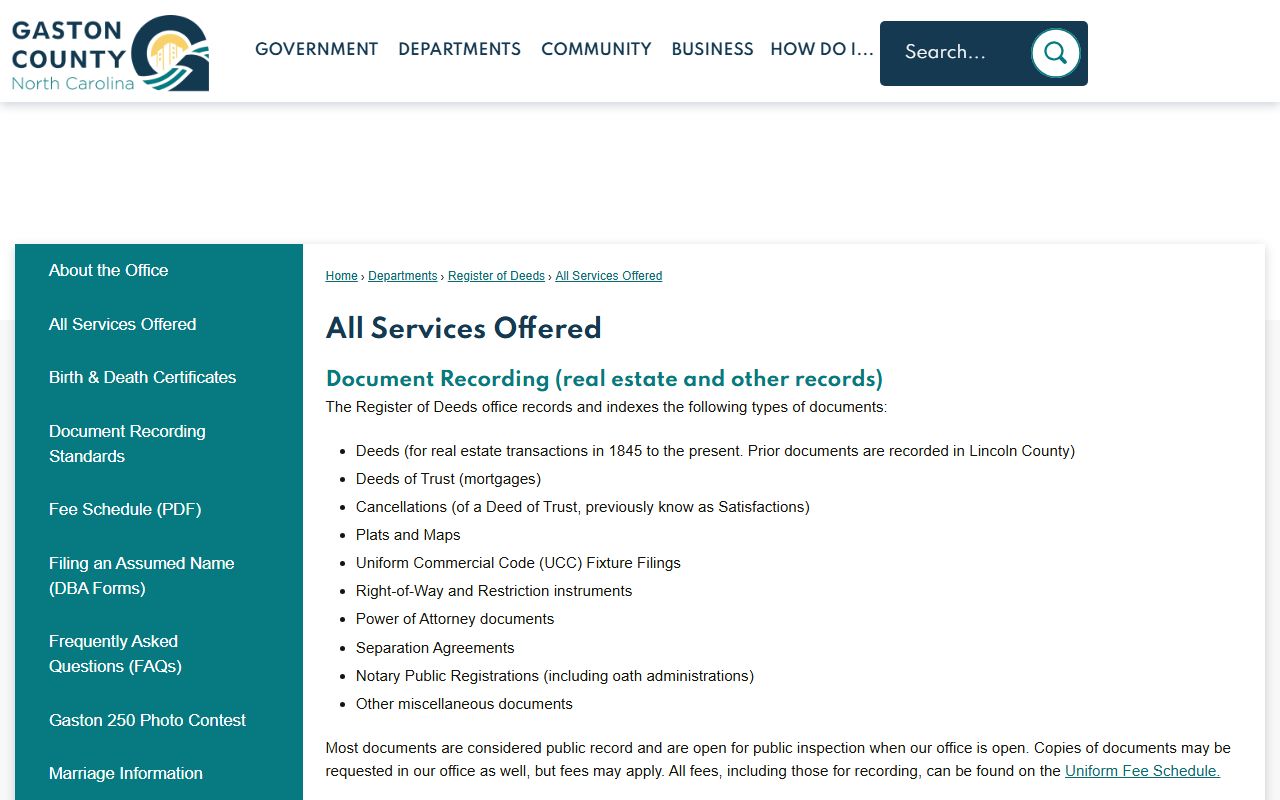
That split helps keep a Gaston County probate records request focused: estate and guardianship court files go to the Clerk, while recorded land and vital records go to the Register of Deeds.
Restricted Gaston County Probate Records
Not all Gaston County probate records are open in full. Guardianship, incompetency, mental health, minor-related, sealed, and private financial details may be limited by statute or court order. Public case information may show that a proceeding exists while withholding sensitive documents or redacted data. A person asking for a full file should be ready for staff to separate public copies from restricted material.
North Carolina's personal identifying information rule is also relevant. N.C.G.S. 132-1.10 limits disclosure of items such as Social Security numbers, taxpayer identification numbers, driver's license and state ID numbers, passport numbers, bank account numbers, credit or debit card numbers, and PIN or password data. Estate inventories, accountings, and recorded instruments can involve financial data, so redaction is part of a careful records request.
The statute screenshot assigned to Gaston County probate records comes from the North Carolina personal identifying information statute. It supports the local rule that sensitive identifiers should not be treated like ordinary public case text.
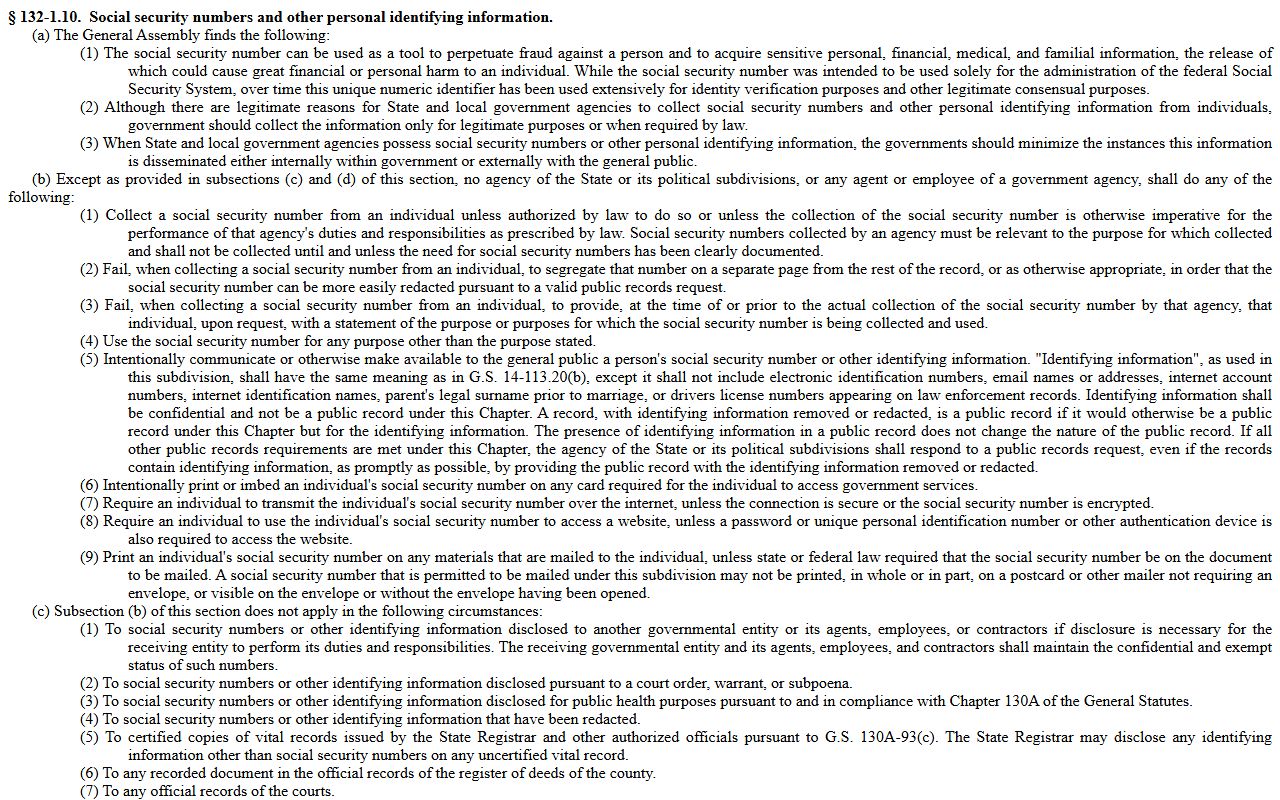
When a probate copy request includes inventories, bonds, accountings, or guardianship papers, redaction can be as important as locating the file.
Federal Records Near Probate
Most Gaston County probate records are state court records. A separate federal case may exist when estate property, bankruptcy, federal tax disputes, or related litigation moves into federal court. Gaston County is in the Western District of North Carolina, and federal dockets are not searched in the NC eCourts Portal. They are searched through PACER or the federal court's CM/ECF system.
The official PACER federal docket access page is relevant because federal cases can sit near, but outside, a local estate file. PACER is useful only when the matter is in federal court, not when the user needs a Gaston County estate inventory or letters from the Clerk.
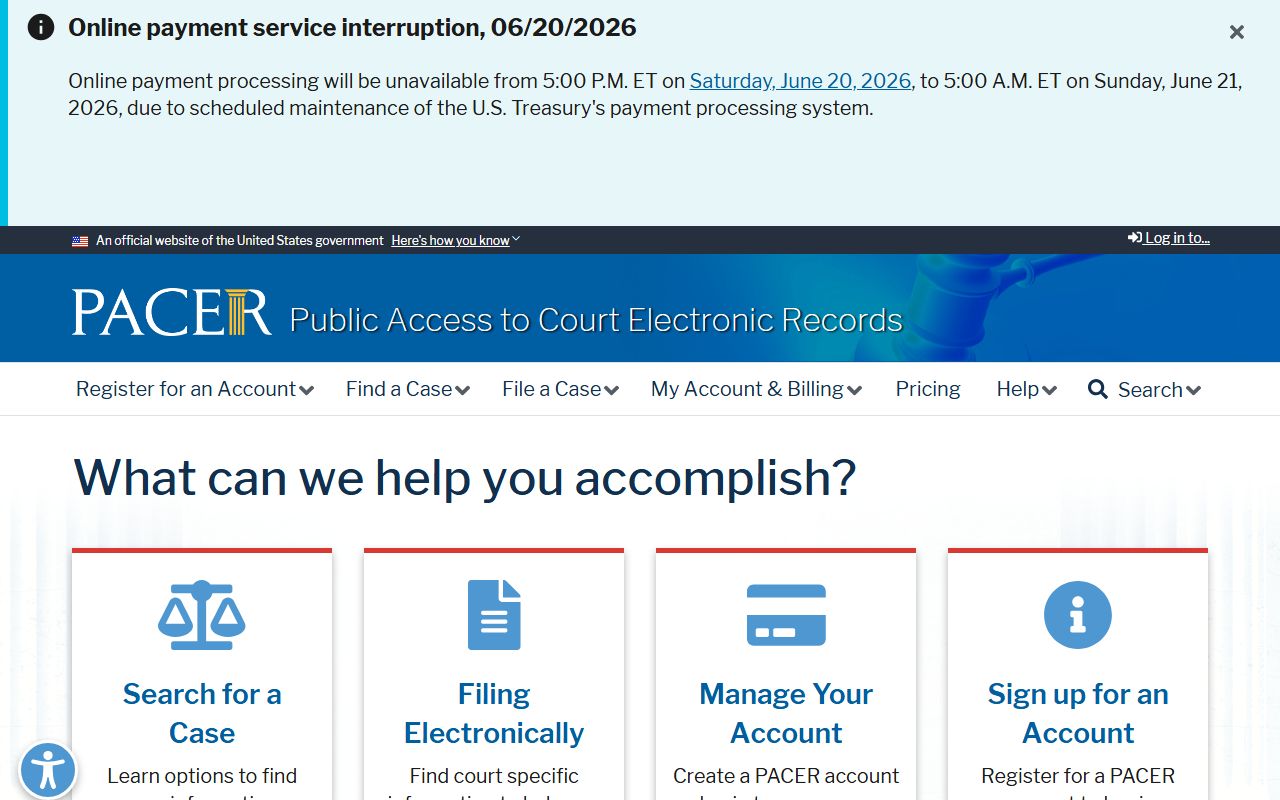
For ordinary Gaston County probate records, PACER should not replace the Clerk search. It is a separate federal docket channel.