
Gaston County Criminal Court Records
A Gaston County criminal court record begins when a criminal charge or process becomes a court case. The record is kept by the Clerk of Superior Court within North Carolina's unified General Court of Justice. It is broader than the arrest entry. It can include the charging document, first appearance, probable-cause activity, indictment, arraignment, motions, plea, trial events, verdict, disposition, judgment, sentence, probation, restitution, fines, costs, and appeal entries.
District Court handles Gaston County misdemeanors, infractions, many first appearances, traffic matters, and preliminary criminal events. Superior Court handles felony criminal cases and many appeals from District Court criminal, infraction, and small-claims contexts. The District Attorney for Prosecutorial District 38 prosecutes criminal cases and prepares the criminal trial docket. The narrow charge pathway is covered in Gaston County arrest records and court charges, while the complete case file sits here as the criminal court record.
The Prosecutorial District 38 District Attorney page identifies the local prosecuting office, and the Gaston County court contact directory gives the clerk, judge, magistrate, and related court phone lines. Those sources help separate prosecution questions from clerk record questions.
Search Gaston County Criminal Records
Criminal court records in Gaston County can be searched through NC eCourts Portal Smart Search. A user can search by record number or party name, then use advanced filters for location, case type, case status, date, and party information. Gaston County should be selected as the location when local results are the goal. The Gaston County court landing page also links to court dates, payments, and county court resources.
- Open NC eCourts Portal and choose Smart Search for criminal case information.
- Search by defendant name, record number, case number, or other known party criteria.
- Filter to Gaston County and narrow by criminal case type, status, or filing date when needed.
- Open the case result and read the docket events, charges, hearings, disposition, and payment fields.
- Request certified copies or paper file access from the Gaston County Clerk of Superior Court.
The NC Judicial Branch says portal results are not the proper path for a formal background check. Background-check users should contact or visit the clerk's office. For state prison, probation, or parole status, the separate NC Department of Adult Correction offender search applies, but that system is not the Gaston County criminal case file.
Users should also separate court records from investigative records. A police report, witness statement, lab record, or body-camera request is not the same item as the criminal case docket. Those materials may be held by a law-enforcement agency and may be withheld or released through a different legal process. The clerk is the right office for court filings, docket entries, judgments, and certified copies.
Gaston County Criminal Case Flow
A criminal court record grows as the case moves. One arrest or citation can create several charges, and each charge can change before judgment. Some felony matters begin with magistrate or District Court activity and then move to Superior Court for indictment, plea, trial, and sentencing. Misdemeanors may remain in District Court unless appealed.
Case flow: Charges Filed › Arraignment › Pretrial and Motions › Plea or Trial › Disposition › Sentencing
| Stage | What Happens |
|---|---|
| Charges Filed | The allegation enters court through a warrant, citation, magistrate process, indictment, or other criminal filing. |
| Arraignment | The charge is formally addressed and a plea may be entered or scheduled. |
| Pretrial and Motions | The docket may show bond issues, discovery, continuances, motions, probable cause, and plea talks. |
| Plea or Trial | The case may resolve by plea or proceed to a trial before a judge or jury. |
| Disposition and Sentencing | The record shows dismissal, not guilty, guilty, responsible, judgment, sentence, probation, costs, and appeal activity. |
What Gaston County Criminal Records Show
A Gaston County criminal court record should be read field by field. The charge section tells what was alleged. The docket tells what happened in court. The disposition tells the result. The sentence section tells what the court ordered after conviction or responsibility. Online information may not include all documents, and restricted fields can be redacted or missing.
| Field | What It Shows |
|---|---|
| Case Number | The criminal case identifier, with eCourts examples using formats such as 15CR123456-910. |
| Defendant | The person accused in the criminal case, often with party details used to distinguish similar names. |
| Charges | Offense description, statute, severity, date, citation or warrant number, and charging agency where shown. |
| Docket Events | Initial appearance, probable cause, indictment, arraignment, motions, hearings, continuances, trial, judgment, appeal, or review. |
| Plea and Verdict | The defendant's plea and any trial result, such as guilty, not guilty, or other court finding. |
| Disposition and Sentence | Dismissal, conviction, deferred result, judgment, fines, court costs, restitution, probation, custody, or compliance terms. |
Charges vs Convictions
A charge is an accusation filed into the court process. A conviction is a court result after a guilty plea, guilty verdict, or other judgment of guilt. Gaston County criminal court records can show charges that were amended, reduced, dropped, dismissed, or resolved as not guilty. That is why the disposition field matters. A search result that lists a charge does not prove a conviction.
| Point | Charge | Conviction |
|---|---|---|
| Meaning | An allegation filed in court. | A final finding or judgment of guilt. |
| Record Location | Charge list, criminal process, citation, warrant, information, or indictment. | Disposition, judgment, sentence, and related docket entries. |
| Can Change | Yes, it may be amended, reduced, dismissed, or superseded. | It may be appealed, corrected, or later expunged if the law allows. |
| Use in Review | Read with caution and check current status. | Still verify sentence, appeal, and expunction status. |
Read Dispositions and Sentences
Disposition is the outcome of a charge or case. Common Gaston County criminal record outcomes include dismissed, guilty, not guilty, deferred, prayer for judgment continued where applicable, judgment entered, closed, appealed, or transferred. Sentencing fields can show custody, probation, fines, court costs, restitution, compliance reviews, or payment eligibility. A case with multiple counts may have a different disposition for each count.
The District Attorney's Office can affect docket movement because it prosecutes criminal matters and prepares criminal trial dockets. The Public Defender Office can also appear in criminal case records when counsel is appointed. Research identifies Travis Page as District Attorney for Prosecutorial District 38 and Rocky Lutz as Public Defender for Gaston Defender District 38.
Sentence entries should be read with the count number and disposition. One count may be dismissed while another count carries probation or costs. A suspended sentence, active term, restitution order, or compliance review can each appear as a separate docket event, so the final result is often more than one line.
Sealed vs Expunged Records
Restricted criminal records require careful reading. Sealed records are hidden from general public access by law or court order. Expunged records are removed from public view through a court process when the person and charge qualify. North Carolina has several criminal expunction statutes, and eligibility depends on the charge, result, waiting period, prior record, and prior expunction history.
| Point | Sealed | Expunged |
|---|---|---|
| Public Visibility | Hidden from ordinary public access. | Removed from normal public record after an order is granted. |
| How It Happens | By statute or court order. | By petition and court order under an applicable expunction statute. |
| Examples | Juvenile, mental health, adoption, or sealed adult matters. | Some dismissed, not-guilty, misdemeanor, or felony matters if statutory criteria are met. |
| Where to Start | Clerk or court order review. | Clerk of Superior Court in the county where the charge was brought. |
The NC Judicial Branch expunction help topic gives statewide guidance for criminal expunctions.
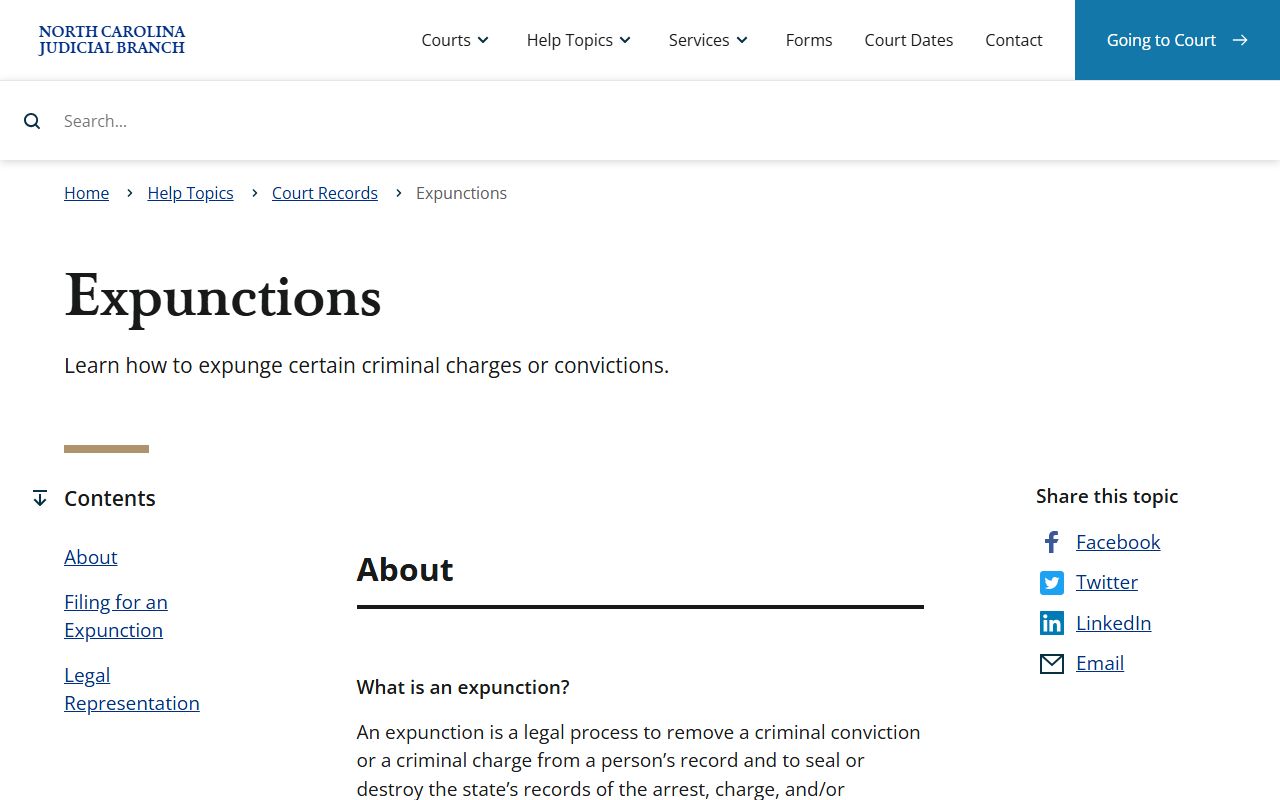
The expunction source matters for Gaston County criminal court records because the filing starts in the county where the charge was brought.
Public Access to Gaston Criminal Records
Adult criminal court case information is generally available through eCourts and clerk office channels, but public access is limited by court rules, expunction statutes, juvenile confidentiality, redaction law, and investigative-record law. N.C.G.S. 15A-145.5 covers expunction of certain misdemeanors and felonies and lists a $175 filing fee unless the petitioner is indigent. N.C.G.S. 15A-146 covers dismissed charges and findings of not guilty.
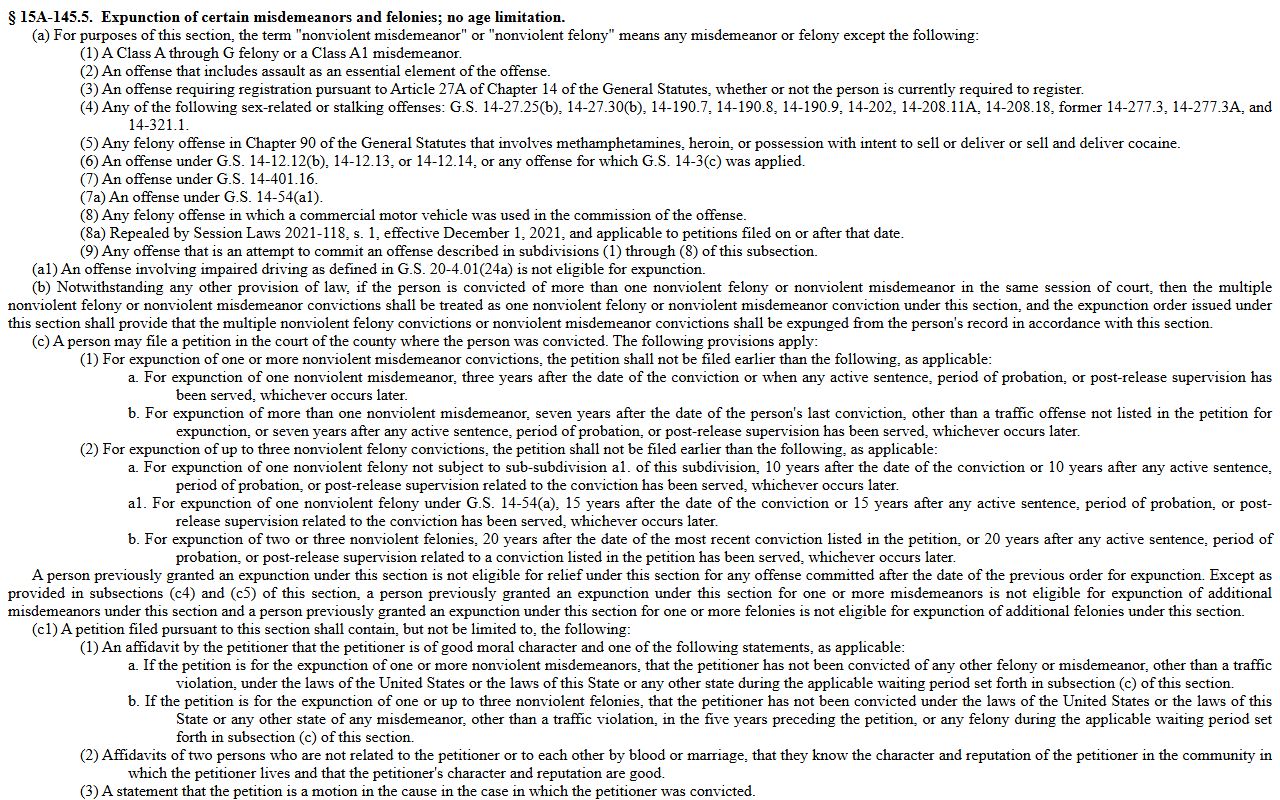
This statute source is tied to Gaston County criminal records when a person seeks expunction for qualifying misdemeanor or felony convictions.
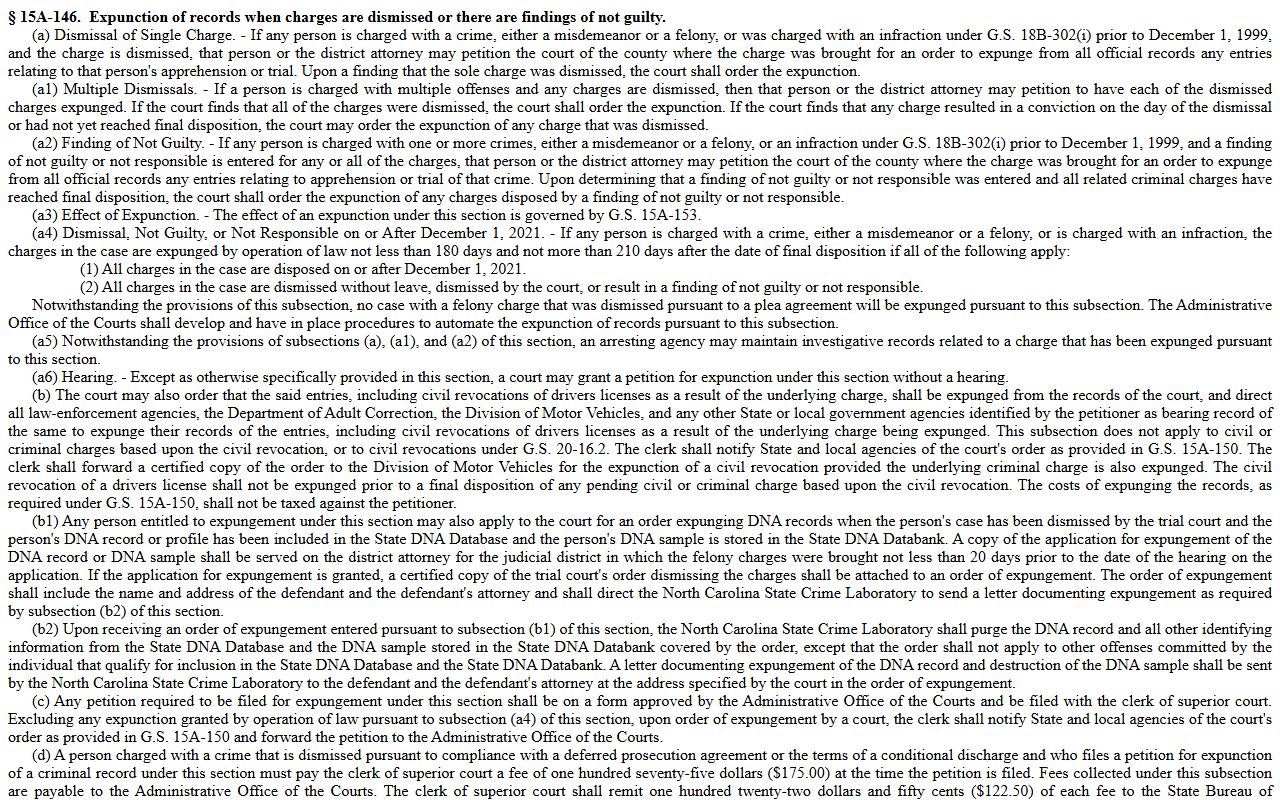
The dismissed-charge statute is relevant when the Gaston County record ended without a conviction and the person is checking whether expunction may apply.
Key Access Point: The portal shows case information, while official copies and background-check requests should go through the Clerk of Superior Court.
Restricted Gaston Criminal Records
Juvenile criminal-type records are not public like adult criminal court files. N.C.G.S. 7B-3000 addresses juvenile court records, and N.C.G.S. 7B-2901 withholds abuse, neglect, and dependency records from public inspection except as allowed by court order or statute. Those limits can affect search results, copy requests, and what a clerk can release.
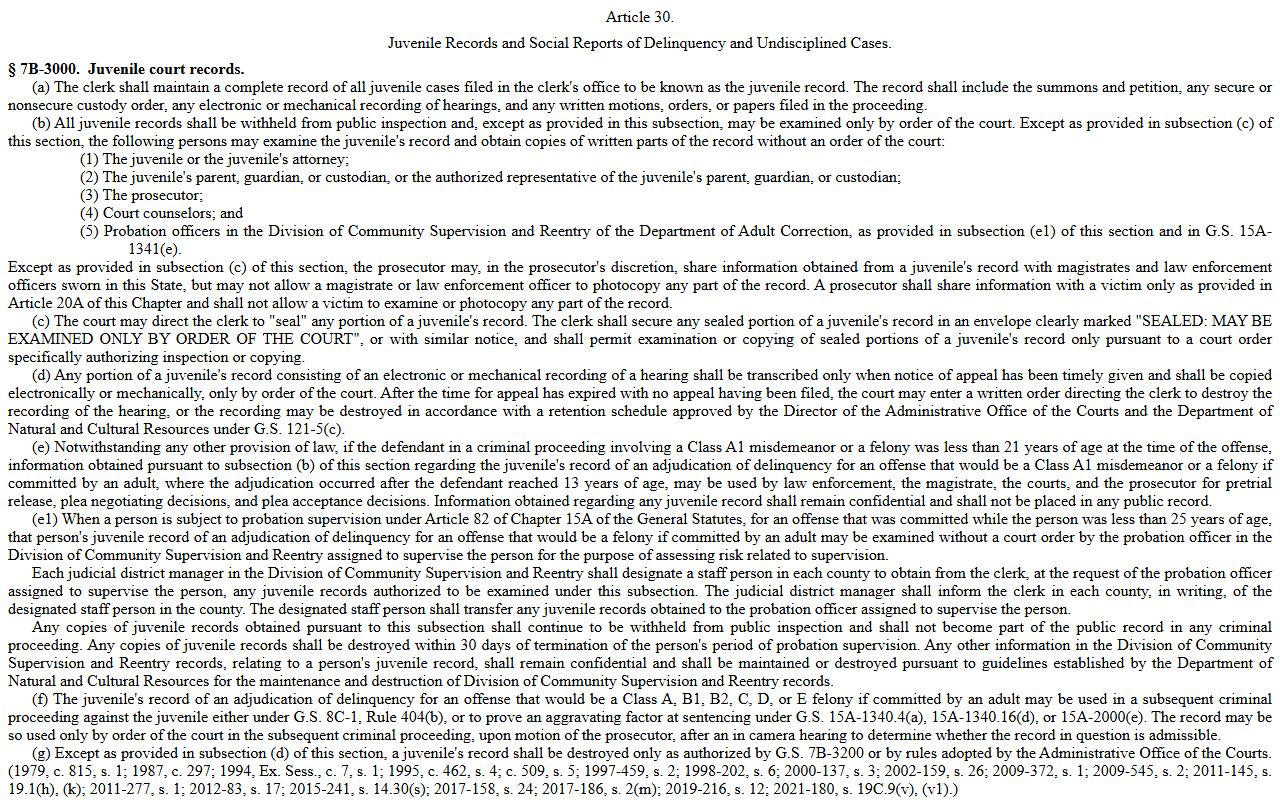
The juvenile-record statute explains why some cases involving young people do not appear in ordinary Gaston County criminal court records searches.
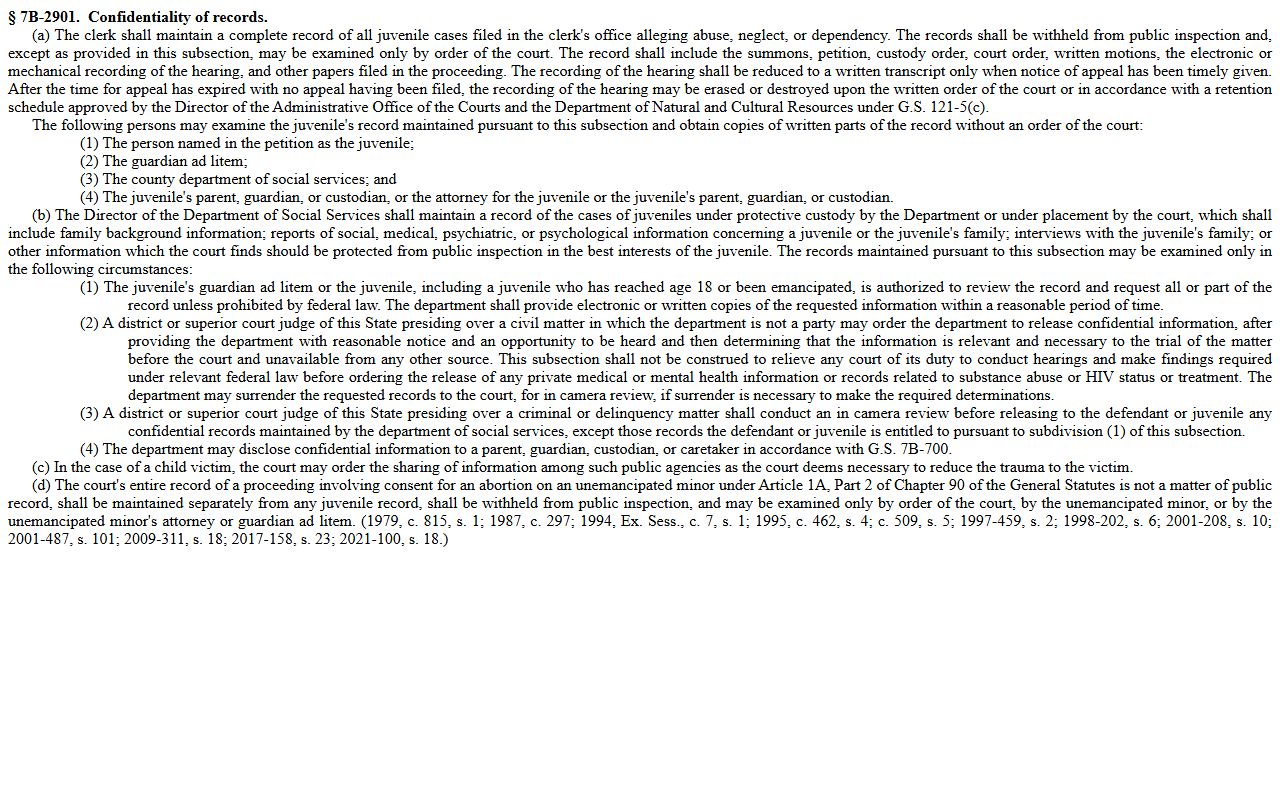
The abuse, neglect, and dependency statute is another reason the clerk may deny public access or require a court order before inspection.